From show kitchens and 3D projection mapping to hyper-local sourcing and brain food, creative innovation is reshaping every bite of corporate event catering
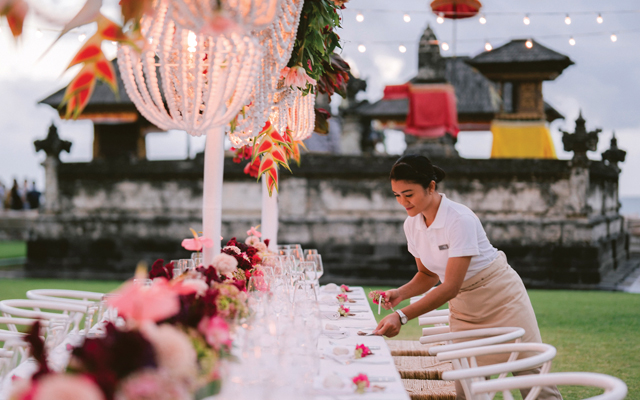
In the modern corporate landscape, F&B has evolved from a functional necessity into a driver of event success.
No longer confined to static buffet lines, today’s catering is being reimagined to elevate corporate functions, breathe life into mid-conference breaks, and foster deeper connections through sensory storytelling.
In this feature, we explore the creative philosophies and trends of five industry leaders to see how they are turning the dining table into a stage for engagement and sustainability.
Hyatt Hotels Corporation
Hyatt Hotels is doubling down on the “Show Kitchen” philosophy it pioneered nearly two decades ago, and is making use of projection mapping and circular waste systems to move beyond standard event catering.
Kate Atkinson, vice president, global sales ASPAC at Hyatt Sales Force and Commercial Pacific, highlighted the brand’s early adoption of interactive open kitchens.
“We were one of the first to transform ballroom dining into an interactive open kitchen with the ‘Show Kitchen’ concept at Grand Hyatt Shenzhen in 2009. Today, we are infusing entertainment directly into our dining concepts, moving toward meaningful culinary narratives that attendees can actually participate in,” she shared.
Leading this charge is the Magic Table at Grand Hyatt Hong Kong, a concept that uses 3D projection mapping to transform a five-course menu into an immersive storytelling experience. By integrating digital artistry directly into the dining service, the hotel ensures the meal is as memorable and engaging as the keynote address itself.
Hyatt is also finding success in destination-rooted formats among overseas attendees. At Grand Hyatt Fukuoka, the hotel has seen high engagement by recreating the city’s yatai (street food) stalls within the banquet hall.
This commitment to authenticity extends to transparent sourcing stories, such as at Alila’s Seasalt restaurant, where the journey of the ingredients is a core part of the dining experience.
“It’s about crafting a menu that serves as a narrative of the location’s culture and community,” Atkinson said.
To support attendee performance during long conference days, the group developed a Mindful Meeting Guide with author and Fortune 500 advisor Juliet Funt. The guide prioritises “white space” and a “90-minute rule” for breaks to prevent cognitive overload. Menus have followed suit with a focus on “brain food” ingredients specifically chosen to sustain concentration rather than provide a temporary sugar high.
“We focus on creating an uplifting atmosphere that allows attendees to truly reset,” she added.
Operationally, the group utilises event registration data to understand dietary patterns in advance, though the primary strategy is designing core menus to be naturally inclusive. By focusing on high-quality lean proteins and vegetable-forward sides, Hyatt can satisfy requirements without a high volume of last-minute requests.
In more examples of sustainability, Hyatt Regency Sydney utilises a containerised system called Goterra, which uses black soldier fly larvae to process food waste with 95 per cent efficiency. In this closed-loop system, the larvae are used as feed for a local chicken farm, which then supplies the eggs served back at the hotel’s breakfast buffet. Supported by in-house tracking tools like HiChef, this allows kitchens to keep tables looking plentiful without overproducing food that ends up in the bin.
Atkinson highlights several trends that will shape the future of event catering. She notes that overseas attendees are trading generic local ingredients for hyper-local authenticity and formats that mirror a city’s character, and wellness is now a standard requirement, driving demand for focus-boosting functional beverages and mocktails. – Rachel AJ Lee
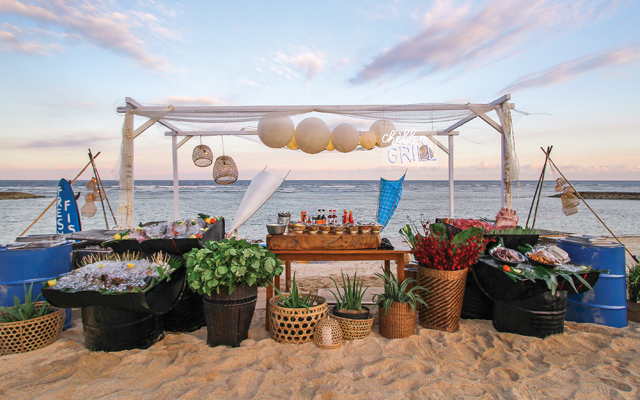
Marriott International
Marriott International is turning the standard conference menu into a tool for mental clarity and cultural storytelling.
Petr Raba, vice president of F&B for Marriott International Asia Pacific (excluding China), indicated that the hospitality giant is ditching static food lines in favour of theatrical F&B. The new mandate focuses on bringing chefs out of the kitchen and into the event space, where the preparation of a meal becomes the primary entertainment.
According to Raba, the goal is to break down the wall between the “back of house” and the guest to build immediate rapport.
“Live cooking and interactive stations allow guests to see and engage with the food as it’s prepared, which immediately elevates freshness, quality, and trust. Ultimately, the theatre isn’t about spectacle alone. It’s also about creating a more meaningful, transparent, and memorable dining experience,” he elaborated.
This move is not just about the “wow” factor; it is also a pillar of Marriott’s sustainability mission. By preparing food to order at live stations, hotels can reduce mass production waste while showcasing seasonal, locally-sourced ingredients that tell a clearer story of origin.
One of the biggest challenges for any conference organiser is the mid-afternoon energy dip, prompting Marriott to re-engineer the break as a physical and mental reset rather than a simple sugar and caffeine hit.
Through brands like Westin and its Eat Well programme, these breaks are now intentionally designed around nutrition and movement.
“At Westin, event planners are encouraged to pair breaks with a wellness activity such as guided stretching, breathing, or mindful movement. The goal is simple: guests leave the break feeling genuinely refreshed, focused, and ready to re-engage, not just refuelled,” said Raba.
Moreover, catering to over 1,000 guests with hyper-specific dietary needs requires surgical precision. Marriott manages this scale through modular menu design and advanced data analytics to ensure seamless service.
By collecting dietary data during registration, teams can forecast demand and pre-position alternatives. Raba revealed that proteins, bases, and sauces are often prepared separately and assembled late in the process, allowing chefs “to adapt plates in seconds”.
Looking ahead, Marriott’s Future of Food 2026 research highlights a decisive shift toward hyper-locality and functional wellness. Ingredients are increasingly chosen to express regional identity – such as native herbs and artisanal dairy in the Australian market – to create a sense of place that goes beyond simple sustainability claims.
Simultaneously, menus are becoming lighter and more functional, prioritising high-protein and low-sugar options to support sustained energy rather than indulgence. Perhaps most visible is the evolution of the beverage programme; the “sober-curious” movement is pushing spirit-free and low-ABV options to the forefront.
“Drinks programmes are moving well beyond house wine toward craft, fermented, and umami-driven mocktails. These are no longer positioned as substitutes, but as premium choices in their own right,” Raba concluded. – Rachel AJ Lee
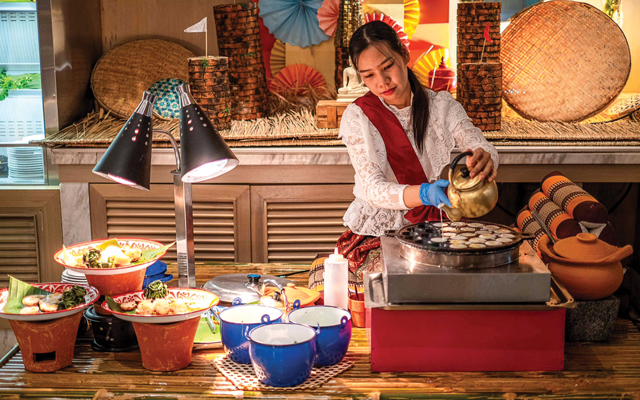
Onyx Hospitality Group
Onyx Hospitality Group is overhauling its catering strategy for business events to prioritise interactive dining and local sourcing over traditional buffet setups.
Sunny Kim, vice president of global sales, said the company views catering as an integral part of the overall event experience rather than simply a food service component.
This shift involves replacing standard mid-conference breaks with sensory-driven elements. For instance, event organisers can integrate live culinary stations, alongside wellness setups like rapid mindfulness sessions from Breeze Spa. These additions aim to re-energise delegates during full conference days.
To differentiate its portfolio, Onyx applies a “Taste of the Destination” concept to networking receptions. Meanwhile, its other brands such as Ozo and Shama integrate lighter menus to sustain delegate focus during extended schedules.
A core component of Onyx’s strategy is the Sustainably Conscious Dining framework. Amari Bangkok highlights this through the ChomSindh concept, which sources ingredients exclusively within Thailand to support regional fishermen and farmers. This localised procurement allows planners to minimise environmental impact while maintaining high-quality event standards. The group is rolling out these tailored solutions across its flagship properties.
As the company marks its 60th anniversary, it continues adapting to shifting corporate demands.
“By combining local sourcing with interactive and wellness-focused elements, we transform a standard catering function into a meaningful cultural connection,” Kim said. – Anne Somanas