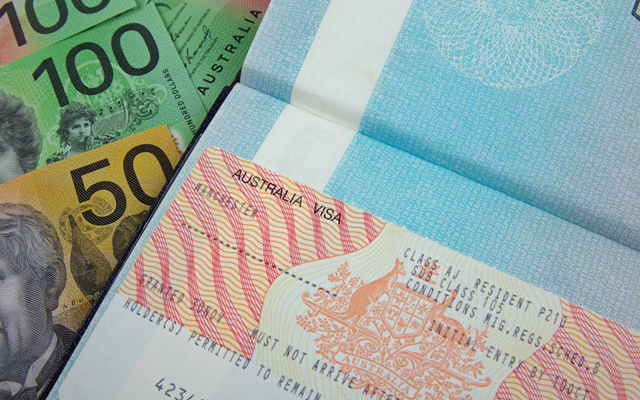
Australia’s latest visa fee increase may not be enough to deter most business events travellers, but its sudden introduction has left some Asian incentive operators managing unexpected costs after client budgets had already been approved.
The Australian government raised the application charge for the Visitor visa (subclass 600) by 25 per cent, from A$200 to A$250, on July 1, 2026, without advance notice.
Upon enquiry, the Department of Home Affairs told TTGmice it was not standard practice to provide advance notice of changes to visa application charges.
The timing created an immediate problem for Samasta Tour and Travel, which was arranging an Australian incentive programme for 125 Indonesian sales professionals travelling in four batches during August.
Three batches had their visa applications submitted before the higher fee took effect. A fourth batch had not yet been lodged because of documentation issues and was therefore subject to the higher charge.
Samasta Tour and Travel’s CEO Teguh Heri Basuki said it was difficult to seek additional payment from the organiser after the programme and budget had already been agreed.
“A$50 is quite significant when multiplied across the group,” he said. “It is not easy to discuss the increase again with the organiser because they are not from the travel industry and do not necessarily understand the situation.”
The corporate client eventually agreed to cover the higher visa costs after further discussions, although it sought a discount from the operator. Basuki said the matter has now been resolved, but believed the government should have provided warning before introducing the change.
Elaine Lau, managing director of Malaysia-based La Global Travel, said corporate clients sometimes expect agents to absorb unexpected increases after prices had been finalised.
“We have encountered this situation before with fuel surcharges, particularly this year, and other external cost increases beyond our control,” Lau said, noting that agents must manage expectations early and pre-emptively communicate potential cost scenarios upfront.
Lau added that the Australian government should have allowed sufficient time for the industry to communicate the higher fee to clients. However, she did not expect the increase to have a significant effect on corporate incentive demand.
“For clients who are cost-conscious, they may think twice because they would rather spend the visa fee on an experience elsewhere,” she said. “For leisure travel it may have an effect, but I do not think that impact will be significant for corporate incentives.”
Pham Thi Thu Hien, CEO of Vietnam-based MayTrip, also believed the higher visa charge was unlikely to influence destination choice among Vietnamese travellers. She said the additional A$50 represented approximately VND1 million and remained a modest component of the overall cost of an Australian programme, particularly as travellers are typically in a higher-spending segment.
Geopolitical factors are having a far greater influence on demand, added Pham. Instability in Europe and tensions in the Middle East have reduced interest in European destinations, particularly itineraries involving transit through major Middle Eastern hubs.
Vietnamese travel to Australia fell below expectations in 2025, which Pham attributed largely to more stringent visa assessments, but demand has rebounded this year.
“The renewed interest suggests Australia is well positioned to see continued growth as a preferred long-haul destination for Vietnamese travellers,” she said.
Other business events planners contacted said they had either felt no effect or considered it too early to assess whether the increase would influence bookings. Planners in Singapore, Malaysia, Japan and South Korea are also less exposed, as eligible passport holders can generally use Australia’s Electronic Travel Authority, which has a A$20, instead of the A$250 subclass 600 visa.
Basuki said it could take at least six months to determine the effect of the higher charge, given the influence of exchange rates and geopolitical developments on destination decisions.