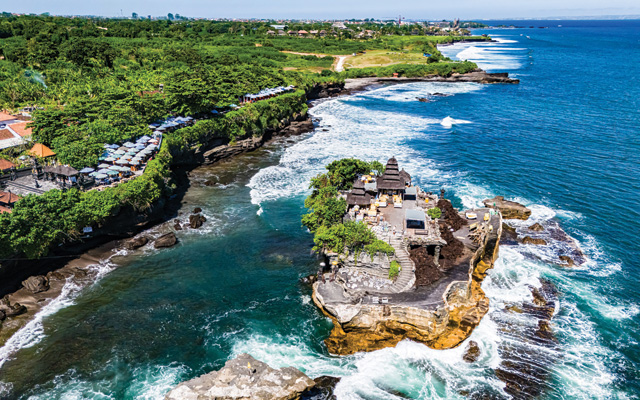
The Bali Convention and Exhibition Bureau (BaliCEB) is rolling out plans to offer complimentary advisory services, activate a global marketing pipeline, and update local hospitality curricula.
Driven by a cooperative gotong royong spirit, these operational priorities serve as the bureau’s first steps before transitioning into a financially sustainable organisation funded by a tiered membership programme.
I Ketut Jaman, chairman of BaliCEB, said: “BaliCEB can assist international event planners by serving as a consultant offering complimentary advisory services. International event planners want trustworthy info on local venue facilities and event regulations – BaliCEB provides that for free. We can also act as a facilitator for those looking to connect with government officials and agencies.”
Globally, BaliCEB is launching a marketing push for next year’s tradeshows, coordinating joint destination pavilions at major events like IMEX Frankfurt, AIME, and IBTM World. ICCA membership and collaborations with Indonesian diplomatic missions will further secure global visibility.
Closer to home, Jaman highlighted the bureau’s commitment to talent development.
“BaliCEB has signed an MoU with three higher education institutions that offer tourism and MICE study programmes. We will collaborate with them to develop HR competencies in the MICE sector, including providing inputs to these universities to align their curriculum with actual industry needs,” he shared.
With these initiatives underway, Jaman expects to build industry confidence and grow the bureau’s membership beyond its current 30 members before introducing membership fees.
Harry Purnama, director of sales and marketing at InterContinental Bali Resort, opined: “In an increasingly competitive regional landscape, Bali requires a coordinated platform to strengthen destination promotion, enhance positioning, and improve competitiveness in attracting a greater number of international events.”
BaliCEB can act as a catalyst for public-private collaboration, driving RFP volume and sustainable growth, he noted.
“BaliCEB should continue to highlight the diversity of Bali’s MICE offerings. In addition, strong collaboration with the Ministry of Tourism, local government, and all industry stakeholders is essential to reinforce promotional efforts in international markets, particularly amid increasing competition from destinations such as Vietnam, Thailand, and Singapore, which are highly proactive in attracting global events,” Purnama added.
“In this context, Bali should be positioned not only as a leisure destination, but as a fully integrated business events destination with a complete MICE ecosystem.”
Gede Ardiana, director of sales and marketing at Merusaka Nusa Dua, pointed out that the industry can no longer rely solely on national promotion due to limited government budgets and a shift to paid participation models.
He said: “The Ministry of Tourism and Creative Economy must promote all of Indonesia, meaning that Bali needs its own dedicated bureau to protect and grow its market share.”
However, Gede stressed that the bureau must demonstrate value before charging members: “For business owners, results are crucial. Naturally, they will want to know what specific benefits they get out of this.”