Oakwood has opened the Oakwood Hotel Oike Kyoto, its 12th property in Japan and its debut in the former Japanese capital.
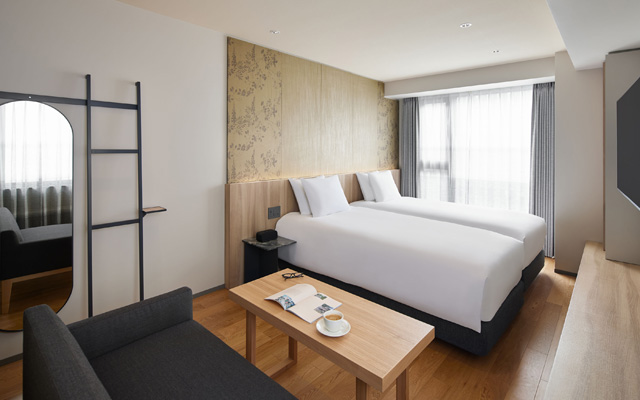
Oakwood Hotel Oike Kyoto features a total of 104 guestrooms, which come equipped with an air purifier, 55′ flat screen smart TV, tablet, press readers and complimentary Wi-Fi.
Studio Superior
In addition, the property’s 16 studio apartments with fully-equipped kitchens and laundry facilities, ideal for business travellers and longer-staying guests.
Amenities on-site include a co-working space, smoking room, laundromat, housekeeping and multi-lingual guest relations for assistance, such as limousine, taxi and airport bus arrangements. There’s also an on-site eatery, Café O, which will serve breakfast featuring local culinary specialities.
Oakwood Hotel Oike Kyoto is a two-minute walk from the Kyoto Shiyakusho-Mae Station on the Municipal Subway Tozai Line and fifteen-minute train ride from Kyoto Station.
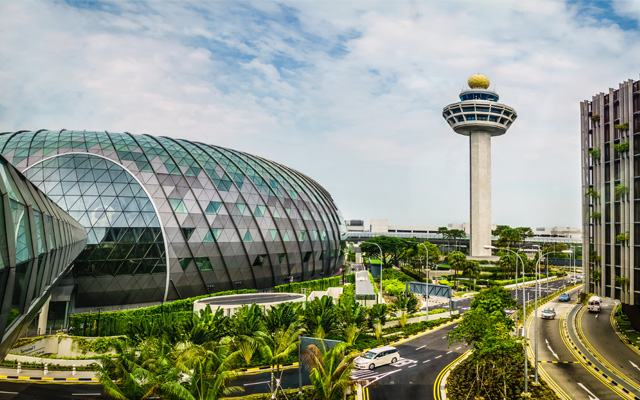
Singapore to expand its vaccinated travel lane (VTL) scheme following success of the VTL for Brunei and Germany; Changi Airport pictured
Singapore will extend its vaccinated travel lane (VTL) scheme to eight more countries, allowing quarantine-free travel for fully vaccinated travellers to the city-state.
From October 19, fully vaccinated travellers from Canada, Denmark, France, Italy, the Netherlands, Spain, the UK and the US will be able to enter Singapore under the VTL scheme, the Civil Aviation Authority of Singapore (CAAS) announced on Saturday (October 9).
Singapore to expand its vaccinated travel lane (VTL) scheme following success of the VTL for Brunei and Germany; Changi Airport pictured
This comes a day after Singapore announced that it will launch another vaccinated travel lane with South Korea from November 15.
CAAS said that the extension of the VTL scheme comes as close to 85 per cent of Singapore’s population have been fully vaccinated, as well as the “successful implementation” of the VTL for Brunei and Germany.
It added that the extension is being done “in a cautious and step-by-step manner” in order to “reclaim and rebuild (Singapore’s) status as an international aviation hub with global connectivity”.
According to the aviation authority, between September 8 and November 12, a total of 179 travellers from Brunei and 4,497 travellers from Germany have been issued vaccinated travel passes (VTPs) for travel to Singapore.
As as October 8, 1,926 VTP holders from Brunei and Germany have entered Singapore. Of these, there have only been two Covid-19 cases, both of whom were detected at the point of arrival through their PCR tests.
Under the VTL, fully vaccinated travellers from these countries may enter Singapore without quarantine and just need to undergo Covid-19 PCR testing. The number of PCR tests will be reduced from four to two for VTL travellers entering Singapore on or after October 19.
They must also obtain a negative test result 48 hours prior to departure for Singapore, and take another test upon arrival at Changi Airport. They will no longer need to undergo further tests on Day 3 and Day 7.
All VTL travellers will be allowed to present their vaccination certificates issued in any countries under the VTL scheme or Singapore, regardless of which country under the travel lane they depart from.
They must travel into Singapore on designated VTL flights, and may transit via another VTL country to take a designated VTL flight into Singapore. Travellers who are transferring or transiting through Singapore will also be allowed to travel on the designated VTL flights.
Short-term visitors and long-term pass holders will need to apply for a VTP to enter Singapore under the VTL, but Singapore citizens and permanent residents will not be required to.
CAAS said there will be no restrictions on the purpose of travel under the VTL arrangement and no requirement for a controlled itinerary or sponsor.
Application for the VTPs for travel to Canada, Denmark, France, Italy, the Netherlands, Spain, the UK and the US will open on October 12, 10.00 (Singapore time); and on November 8, 10.00 (Singapore time) for South Korea.
Meanwhile, short-term visitors who require a visa for travel to Singapore are advised to apply for their visa only after receiving their VTP approval and before departing for Singapore.
They must also purchase travel insurance with a minimum coverage of S$30,000 (US$22,146) for Covid-19-related medical treatment and hospitalisation costs, prior to travel to Singapore. These visitors must also use the TraceTogether app in Singapore to facilitate contact tracing.
Following the announcement, Singapore’s national carrier Singapore Airlines (SIA) and its budget arm Scoot have said they will launch more flights under the VTL scheme.
SIA will expand its VTL network to nine more cities. From October 19, the airline will operate VTL services from Amsterdam, Barcelona, Copenhagen, London, Los Angeles, Milan, New York, Paris, and Rome. Meanwhile, SIA’s VTL services from Seoul will begin on November 16.
The airline currently operates VTL services from Bandar Seri Begawan in Brunei, as well as from Frankfurt and Munich in Germany.
SIA said multi-city itineraries within VTL countries are allowed if customers meet the 14-day travel history requirement, which includes transit countries. For example, a traveller may fly from Singapore to Paris, and then Paris to Amsterdam, and still be eligible for the VTL flight from Amsterdam to Singapore.
Lee Lik Hsin, executive vice president commercial, SIA, said: “Singapore’s expansion of the VTL arrangements to 11 countries is great news for our customers, who can now reunite with their loved ones more easily or finally go on that overseas holiday.
“The SIA Group supports all measures to reopen Singapore to quarantine-free international travel. This will enable the safe and gradual recovery of Changi Airport as a major air hub, backed by rising vaccination rates and confidence in the robust health and safety measures across the end-to-end customer journey.”
Meanwhile, Scoot will resume thrice-weekly non-stop flights between Singapore and Berlin from October 19.
The airline will also increase the frequency of its non-VTL Singapore-Athens-Berlin return flights to four-times-weekly, with effect from October 17. Consequently, from October 19, Scoot will operate daily between Singapore and Berlin.
The airline said it is also preparing to operate VTL flights to Seoul, South Korea, with the commencement date to be announced “in due course” .
Singapore’s announcement of the expansion of its VTL scheme has been met with open arms by industry stakeholders.
Philip Goh, IATA’s regional vice president for Asia Pacific, called the move “a positive and promising development for the aviation and travel sector”.
He added: “The easing of the testing regime for vaccinated travellers on vaccinated travel lanes from four to two PCR tests will reduce travel costs. That’s an equally important and positive factor. These data-based decisions to open up borders progressively will certainly boost air travel recovery.”
Goh said the association looks forward to more of such progressive and positive developments that will help to restart air travel.
“From experience, we have seen in other parts of the world, including Europe and the US, relaxation of travel restrictions have led to improvements in the travel market and is good for airlines and travel businesses,” he said.
“We recognise that the Asia-Pacific region has a different risk appetite, partly owing to lower vaccination rates in many parts of the region, but we hope this further easing of measures and expansion of Singapore’s border reopening will spur other markets to similarly navigate their pathways towards restarting air travel.”
Calling Singapore’s announcement “very encouraging” and “a step in the right direction”, Goh expressed hope that this will give other Asia-Pacific states confidence to hasten the reopening of their borders.
He noted that while the aviation sector faces a long journey to recovery, with international passenger demand forecast to reach only about 44 per cent of pre-Covid levels in 2022, “positive strides forward in the restart will bring further confidence”.
Meanwhile, Bertrand Saillet, managing director at FCM Travel Asia, commented: “After the announcement of the Germany Vaccinated Travel Lane, we saw an uplift of 89 per cent in bookings to Germany; considering that pre-Covid FCM saw a higher volume of travel to South Korea than Germany, we are expecting an even greater increase in bookings to South Korea.”
Saillet indicated that FCM also “expects a greater proportion of (business) trips to incorporate personal travel once the VTL agreement with South Korea is in place”, as South Korea is a popular leisure destination for Singaporeans. South Korea is also the first bilateral trade corridor open within Asia.
“Before the pandemic, less than five per cent of trips booked by FCM
have been leisure or bleisure trips. In September 15 per cent of trips booked to Germany had been for leisure or business combined with leisure,” added Saillet.
The Singapore Hotel Association (SHA), which represents 160 member hotels in Singapore, has also welcomed the expansion of the VTL scheme.
Kwee Wei-Lin, president of the SHA, said: “This announcement sends a strong signal about Singapore’s readiness for tourism recovery in the months ahead. Following the smooth pilot of the VTL with Germany and Brunei in September 2021, we are confident that the gradual increase in number of VTLs will strengthen the move to reopen Singapore’s border in a controlled and responsible manner.
“Over the past 19 months, our industry has been working hard to reimagine the new hotel experience through digital transformation, job redesign and upgrading of our facilities. All our members are now in a strong position to welcome the arrival of more international guests through the 11 VTLs.”
US incentive groups prioritising domestic destinations
International programmes most likely from 2Q2022
Destination safety and appeal are top consideration; value for money less so
The September results of the Corporate InSITEs study has shown that 50 Fortune 500 companies in the US are delaying their resumption of international incentive trips, with most turning first to domestic destinations.
For overseas programmes, most are looking to conduct their first in-person meeting and incentive trip in 2Q2022, and a number are even expecting their first post-pandemic international activity to only take place in 2023.
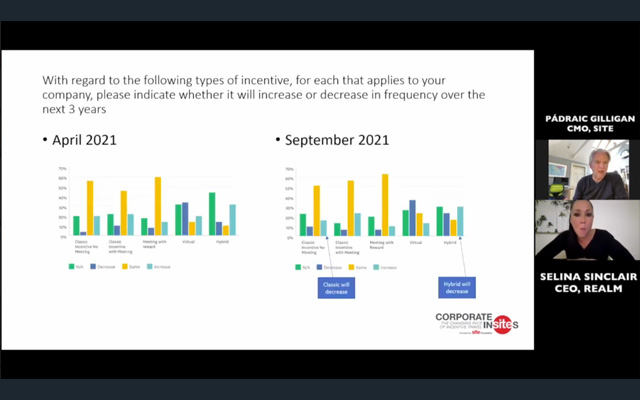
SITE representatives Padraic Gilligan (top) and Selina Sinclair shed light on US incentive travel intentions
In presenting the findings during IT&CM Asia 2021 last week, Selina Sinclair, CEO of Realm and a SITE Foundation trustee, also pointed out that the pandemic has forced 74 per cent of respondents to replace their 2020 incentive travel with another type of reward and 42 per cent to do the same with their 2021 programme. The proportions are slightly larger than the April findings, where 71 per cent and 31 per cent had adjusted their incentive programmes respectively.
Sinclair said she was not surprised “since many destinations around the world are still closed”.
“As an inbound operator in Asia, we hope that programmes could return in 2021 or early 2022, but that’s just not the reality at the moment,” she said, adding that the study has also identified Delta concerns as leaving an impact on incentive travel confidence.
“We thought that there would be just one or two waves of Covid, but we have seen four, five waves in certain countries. That has obviously added to the volatility within companies wanting to return to incentive planning, and causing companies to move their dates to the later part of 2022,” she said.
Fellow presenter, Padraic Gilligan, chief marketing officer of SITE, shared that respondents are mostly looking to maintain classic forms of incentive programmes – incentives with no meetings, classic incentives with meetings, and meeting with rewards. Results do not differ much between April and September, although both Gilligan and Sinclair have observed some creative virtual meetings and incentives being held during the pandemic.
Sinclair noted that a smaller number of respondents are intending to adopt hybrid formats for their future incentive events in the September study compared with the last, but said it “remains to be seen what this really means…since industry players are still debating a lot on the definition of hybrid incentive events”.
In light of Covid concerns, respondents regard contracts & risk management, destination selection, better analytics, and new resources & skills as factors most important to the future success of their incentive travel programme. The results between April and September are similar.
Sinclair predicts sustainability considerations will rise in rankings in the January 2022 study once decision-makers are able to move past urgent matters that must be resolved and “move forward again on planning content”.
She highlighted a continued sense of optimism for incentive travel resumption among leaders in the surveyed US companies. In the April study, 94 per cent of respondents were committed to returning to incentive travel.
To better understand their intentions, the September study enquired on risk and cost considerations. Half are fully committed to resuming incentive travel without safety and cost considerations, while almost 35 per cent are committed but will want to reduce risk.
A much smaller percentage is committed to resuming incentive travel, but will have to reduce cost.
Sinclair reflected: “I expected more to opt for the need to reduce cost since we know budgets have been reduced and many have been able to see savings from not doing any activities in 2020 and 2021 or replacing their incentive programmes with virtual executions. The good news is that I have companies coming up to us saying, we want to do our programmes again in 2022/2023 and now we have doubled the amount (of money).”
Expanding on the findings, Gilligan referenced the Incentive Travel Industry Index, which the SITE Foundation is involved in with the Incentive Research Foundation and Financial and Insurance Conference Professionals. He noted that destination safety considerations had “eclipsed everything else in terms of organisers’ concerns”.
Traditionally, the top three criteria for incentive destination selection is the appeal of the destination, the destination’s infrastructure, and value for money. However, value for money considerations have fallen down the ranks since the pandemic hit, in line with Corporate InSITEs findings. In April, a majority of US respondents ranked safety as the most important criteria when selecting a destination, followed by destination appeal, infrastructure and access. In September, destination appeal is ranked in first place, followed by safety, infrastructure and access.
“Companies are taking a different view; they are concerned about their people and duty of care to qualifiers. In that context, issues of safety become much more important than issues of value for money,” remarked Gilligan.
Agreeing, Sinclair said: “Safety used to mean different things. Before, safety is what will happen in the destination. Today, safety is paramount even before you leave home.”
With the September Corporate InSITEs findings pointing to a delayed return in international incentive travel programmes undertaken by the important US source market, Sinclair said Asian destinations and DMCs would have to continue to “look for new ways of earning revenue” and to adapt to local and regional clients.
“We Asian DMCs have shown that we can pivot well, like we did with virtual events. Local events have become the bread and butter for many companies. I know a lot of DMCs have innovated too,” she said.
Asian DMCs are also staying busy with laying the groundwork to “support international companies that are looking to (return to their) destination”.
“There are a lot of questions about arrival requirements; changes to operations when we visit in two, three, four or five years from now; etc. DMCs are playing a bridging role between the government and organisations in the supply chain. At the same time, DMCs are getting their teams trained and certified to implement their government’s safe management measures,” she said.
Sinclair also emphasised the critical role of tourism boards in a post-pandemic travel environment, saying that they help to “educate both DMCs and companies on how to navigate (post-pandemic travel)”.
“(Tourism boards) are obviously linked to all the decisions made within the government. Some tourism boards have been outstanding in their ability to communicate information as they come to light,” she said. – Additional reporting by Mimi Hudoyo
As coronavirus concerns continue to hamper business events, Kyoto is embracing online and hybrid hosting with new safety measures.
While this is happening, the city has also been busy launching new accommodations, activities and facilities for the eventual return of international arrivals.
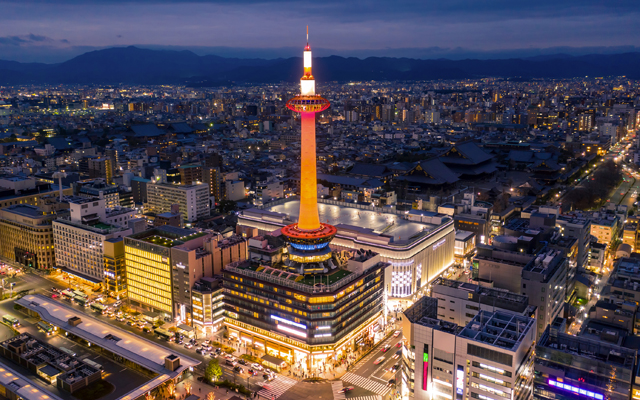
Kyoto Tower is the tallest building in the city, located close to Kyoto Station
In March 2021, the Kyoto Convention & Visitors Bureau (KCVB) and Kyoto City launched the second edition of MICE Kyoto Model: Coexisting with Coronavirus.
The comprehensive guide is designed “to ensure the safety and security of MICE organisers, participants and residents” while carrying out three objectives: achieving a high level of satisfaction with MICE events held in Kyoto, contributing to the community and revitalising the local economy. It features steps to prevent Covid-19 spread, based on guidelines issued by various industries, and offers suggestions and case studies of ways to utilise both technology and Kyoto’s traditional culture to hold a high-quality event.
Delivering an experience unique to Kyoto – whether for an on-site or hybrid event – is the ultimate goal, according to the guide. Online presentations by renowned speakers; online tours of event venues, sightseeing spots or traditional workshops; and the introduction of workation or bleisure options in coordination with business events are among the options available to organisers.
When borders reopen, the events industry remains confident that Kyoto will be an equally – or more – attractive destination for business events post-Covid.
“Kyoto has attracted more than double the number of international conferences in the past five years,” said Yoshiaki Matsui, deputy director of conventions and tourism at KCVB. “The city draws people because it is worth the trip, with World Heritage Sites and other places of historical and cultural significance on offer.”
Matusi pointed to Kyoto’s wide variety of accommodation, from global brands to budget hotels, as well as vast options in facilities and unique venues. Events can be tailormade to meet the needs of attendees, and there is truly something to appeal to everyone, he explained.
In 2020, Kyoto added another asset to its business events portfolio with the launch of KCVB’s Kyoto Unique Venues Guide. The directory outlines the city’s 46 unique venues in painstaking detail, from their history and unique value to capacity, opening times, location and contact details. The venues are divided into six categories: World Heritage Sites, Temples & Shrines, Museums & Tourist Attractions, Historical Buildings, Restaurants & Event Spaces, and Chartered Trains.
One of note is Kyoto City KYOCERA Museum of Art, which reopened in March 2020 after a three-year renovation. Dating from the 1930s, the building is the oldest public museum building in Japan, so the renewal involved preserving as much of the original structure as possible. New modern features include Higashiyama Cube, the wing for contemporary art, which includes a roof terrace overlooking a Japanese garden. For buffets, Higashiyama Cube accommodates 80 pax while the Japanese garden accommodates 60.
In the accommodations space, Asia’s first Ace Hotel opened in Kyoto, in 2020, in the former headquarters of Kyoto Central Telephone. The structure dates from 1926 and features vintage brickwork, with designs by renowned architect Kengo Kuma. Located centrally, the main hotel has 213 rooms, three F&B options, and a 24-hour fitness centre.
Kyoto City KYOCERA Museum of Art reopened in March 2020 with venues for private events
Situated near Nijo Castle, The Mitsui Kyoto, a Luxury Collection Hotel & Spa, also opened in 2020. The hotel boasts 161 rooms, alongside four F&B offerings including Gastronomy Teppan, and Shiki-no-Ma, a modern yet faithful reconstruction of the Mitsui home that has sat on the grounds for 250 years. This facility can be used for private dining or a tea ceremony, and is surrounded by a Japanese garden.
Despite a drop in visitors to the city due to the pandemic, activity and experience providers have continued to launch new offerings.
In spring 2021, the Lake Biwa Canal Cruise was unveiled. It explores the series of canals that began bringing fresh water to the city in 1890. Available for hire during spring (for cherry and plum blossoms appreciation) and in the autumn (for fall foliage viewing), the tours are ideal for laid-back corporate excursions.
For organisers looking to incorporate some teambuilding into corporate events, the KCVB has launched a programme that features attractions, including World Heritage Sites.
The KCVB is also continuing its subsidies for Kyoto Culture, which helps to cover the cost of including traditional Kyoto-style programmes, such as geisha dancing and wadaiko drumming, or purchasing local products as souvenirs for attendees. By supporting traditional industries and using providers with certified sustainable practices, the KCVB aims to boost the sustainability of business events, a priority for the city, which is listed on the Global Destination Sustainability Index.
Hong Kong’s rising national vaccination rate, improving Covid-19 conditions and relaxed social distancing policy have facilitated a revival of small, local in-person events.
As of late-August, Hong Kong has allowed attendance at in-person events to be 50 per cent of a venue’s normal capacity, provided people keep their masks on and no F&B service is offered. Even more encouraging, full venue capacity usage is possible if two-thirds of participants have received the first dose of a Covid-19 vaccine.
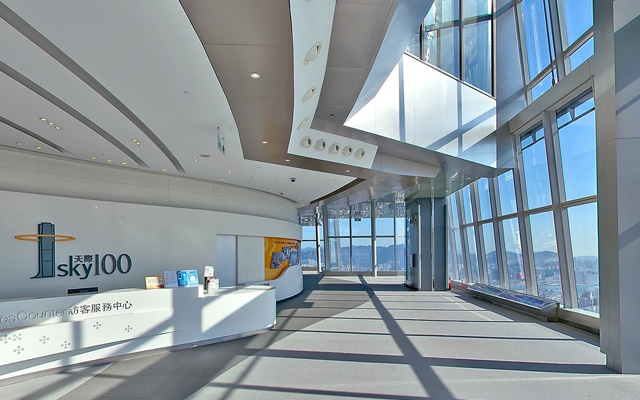
Sky100 Hong Kong Observation Deck
Marcel Holman, managing director of The Langham, Hong Kong, welcomed increasing demand for a range of private events, such as annual general meetings, hybrid webinars by pharmaceutical firms, insurance seminars, education fairs and recruitment drives.
“With our upgraded IT infrastructure, we have successfully helped our clients arrange multiple concurrent virtual interviews with overseas personnel, as well as virtual conferences with our hybrid meeting facilities,” Holman said.
Furthermore, hotel staff have been vaccinated, allowing The Langham, Hong Kong to scale up operations, such as extending catering hours to mid-night. Come October 2021, the hotel will be ready to welcome banquets for up to 180 guests.
Event enquiries for 2022 have also streamed in from overseas clients, giving Holman some confidence of recovery from 2Q2022.
Cordis, Hong Kong’s fully vaccinated service team has also helped to revive the hotel’s event business, with education fairs, IT conferences, property investment and emigration seminars now back with 100 to 120 attendees. Hybrid medical meetings with F&B service are also returning, with 30 to 50 people in attendance.
JW Marriott Hotel Hong Kong
Director of sales and marketing Kitty Tang expects medical and overseas education business segments to continue to contribute most of the in-person events at the hotel, while further growth could come from finance, insurance, health care and beauty companies that begin to resume their planning activities.
With rising vaccination rates, Tang sees larger events are on the horizon.
To stay ahead of the competition as local events reactivate, JW Marriott Hong Kong rolled out an Extended Reality offering, allowing virtual and face-to-face meetings and events to take place simultaneously on-site. The capability is said to be the first-of-its-kind meeting solution among Hong Kong hotels.
A JW Marriott Hong Kong spokesman told TTGmice that organisers host physical events to achieve better engagement with their participants, and so hotels have to be flexible with event set-ups, catering needs, and use of space.
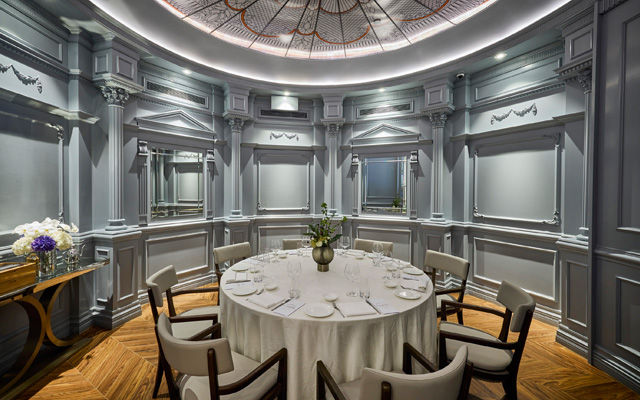
The return of small, local in-person events has not escaped the attention of unique venues. Giacomo Italian restaurant at Crowne Plaza Hong Kong Causeway Bay has set its eyes on private corporate gatherings. Since its opening in August, the restaurant has hosted several small-scale corporate events – mostly by luxury brands – for an average of eight people per group.
Giacomo
Giacomo expects the year-end festive seasons and celebrations to ring in even more intimate corporate gatherings, as companies reward clients and reconnect with associates.
Unfortunately, not all unique venues in Hong Kong have been able to benefit from the resumption of private events. Sky 100 Hong Kong Observation Deck, for instance, is bound to stringent social distancing rules that apply to public areas and public entertainment licensed venues. One of the restrictions is on F&B catering – events at Sky 100 Hong Kong Observation Deck are not allowed to offer any refreshments.
A Sky100 Hong Kong Observation Deck spokesperson told TTGmice that while there have been many event enquiries, social distancing restrictions have led many potential clients to turn to other venues.
The spokesperson hopes that the venue’s flexibility and commitment to bringing clients’ events to fruition, even in the event of sudden tightening of Covid-19 regulations, will win clients over.
“We are flexible which can help us to manage the expectation of our clients. Should regulations tighten overnight, for example, we can extend venue usage so that the organiser can split the event into several sessions to meet government requirements,” said the spokesperson.
Safeguarding mental health has become a priority for Philippine travel and tourism stakeholders who are more susceptible to depression, stress, and anxiety brought about by the consequences of the prolonged lockdown that is now entering its 19th month.
The extent of their suffering is gleaned from the recent Nikkei Asia’s Covid-19 Recovery Index (as of September 30), which ranks the Philippines as the worst among 121 countries in responding to the pandemic. Bloomberg’s Covid-19 Resilience Ranking classifies the Philippines as the worst place to be among 53 countries in containing the pandemic.
Organisations like the Tourism Promotions Board and the Philippine Council of Associations and Association Executives are working uplifting and motivational content into their regular member engagements
Addressing mental health concerns, the Tourism Promotions Board (TPB) and stakeholders’ online meeting every Wednesday has evolved “into a period for retooling and relearning,” pep talks and motivational talks, said chief operating officer Anthonette Velasco-Allones.
The simple act of guesting clinical psychologist Joanna Herrera, who discussed mental health and mindfulness last Wednesday, inspires and “keeps hope alive in the hearts of our stakeholders, including tour operators and travel agents”.
In the predominantly Catholic country where people find solace in spirituality, TPB’s wellness and work-life integration programme for its staff has online fellowship “to keep the team connected” that includes a virtual holy Mass every first Friday of the month and bible studies, Velasco-Allones said.
Many staff find therapeutic the Think Tok (a variant of Tik Tok) that refreshes skills on writing, productivity, powerpoint presentation, Zoom set up, and work from home set up. The most recent was a mindfulness session led by a yogi.
It is understood that the Department of Tourism will be adopting most of the mental health safeguards being practised by TPB.
Cleofe Albiso, group general manager of Megaworld Hotels, shared that they have a Circle of Happiness programme with several projects and activities including webinars for all associates “that allows us to love ourselves, our families, our community and God is at the centre of it”.
Albiso cited the importance of mental health and well-being as most of their properties are fully operational. Ten hotel general managers will attend the MICECON conference in Boracay late this month, for work and leisure for their general well-being.
Recognising that association executives face mental and physical anguish and stress during this pandemic, the Philippine Council of Associations and Association Executives has been balancing its webinar offerings with “hard core management and governance courses plus inspirational and motivation topic representations, such as those concerning personal upliftment and optimism like values and faith, which are part and parcel now of our new normal”, shared founder and CEO Octavio Peralta.
“Concerning faith, which life coach Bo Sanchez delivered, attracted the most number of attendees. We plan to do this more often,” Peralta added.
PATA Philippines Chapter, one of the first that addressed mental health issues for its members and stakeholders, once invited a priest to talk about keeping the faith, as well as celebrities who survived arduous life challenges.
Most visitors to Hong Kong under the scheme enter via Shenzhen Bay Port
Although The Come2hk Scheme – which enables non-Hong Kong residents to enter the destination via Guangdong Province and Macau – was resumed on September 15, it has yet to yield as much corporate travel traffic as it was anticipated to achieve.
Despite a daily quota of 2,000, government statistics showed that some 4,301 visitors were received between September 15 and 28. Among them, 3,816 arrived via Shenzhen Bay Port while the rest used the Hongkong-Zhuhai-Macao Bridge Hong Kong Port.
Most visitors to Hong Kong under the scheme enter via Shenzhen Bay Port
China Travel Service (H.K.)’s general manager, George Kai, told TTGmice that the majority of scheme users were Visiting Friends and Relatives (VFR) travellers. Business travellers are reluctant to utilise the scheme, as they would still be subject to quarantines upon their return to Guangdong or Macau.
Kai added that while the pandemic situation has stabilised and more small- to medium-size corporates were restarting their events and exhibitions, those activities were attracting mostly the domestic audience.
What would be helpful in restarting Hong Kong’s business travel and events traffic, Kai suggested, was the reciprocal easing of quarantine restrictions for travellers returning from Hong Kong.
While Wharf Hotels’ president, Jennifer Cronin welcomed the scheme, she pointed out that corporate travel would be slow to return as extra layers of approval are currently required for corporate trips, and many organisations have gotten used to virtual meetings, conferences, and tradeshows.
“The limited corporate travel we see involves longer stays and consolidated itineraries, while there’s still a wait-and-see approach for non-essential travel,” Cronin said.
Cronin added that she’s “hopeful” that Hong Kong’s vaccination rate will improve to a point where the destination will be able to “form travel corridors with other countries” and “alleviate pent-up demand”.
“As long as borders remain restricted, the knock-on effects to society and the economy will be increasingly worrisome,” she said.
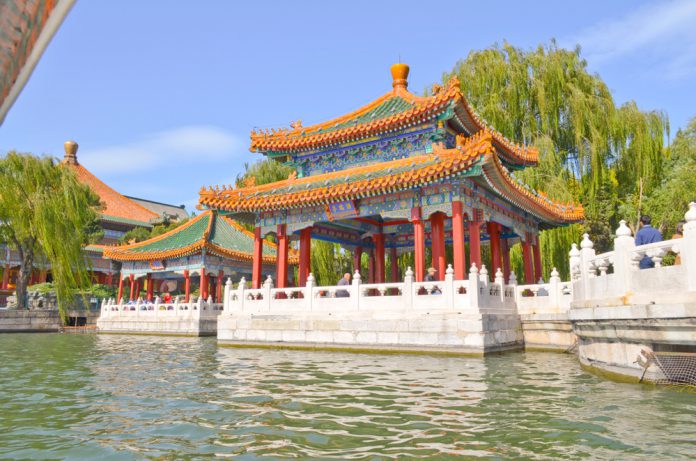
Renting the Five Dragon Pavilions in Beijing’s Beihai Park (pictured)
China’s leading DMC veterans have openly acknowledged that the country is “no longer cheap”, and is now competing with various other global alternatives, during the first Visit Beijing Trade Connect online roundtable discussion on The Future of Beijing MICE last week.
Alicia Yao, managing director, IME Consulting, highlighted the “reasonable rentals” for unique venues like palaces and museums in Vienna, while Frank Feng, CEO of China Star, addressed the high cost of hosting a cocktail event at the iconic Five Dragon Pavilions in Beijing’s Beihai Park.
Renting the Five Dragon Pavilions in Beijing’s Beihai Park (pictured) comes at a higher cost
Meanwhile, Daniel Lim, co-founder and director-MICE of Singapore-based Event and Marketing Solutions (EMS), credited TCEB (Thailand Convention and Exhibition Bureau) for being supportive and was one CVB that impressed him.
He shared that TECB was “engaging”, “very willing to help” meeting planners and have been organising regular supplier updates to “remain connected” during the pandemic.
For EMS’ co-founder and director, MICE and luxury travel, Angela Lee, Australia and New Zealand stands out for good service, creativity and for “having nature”, where different programmes like “cycling and wellness” could be organised.
Apart from not speaking English, Feng said European and US clients needed to know that most Chinese DMCs typically focused on domestic MICE, while Yao said international clients should partner DMCs that could help them understand the different rules and how China operates.
Lee added expectations of overseas meeting groups have to be well managed, citing the example of what to expect during coffee breaks, while Lim added suppliers needed to be “flexible” and help clients “understand what is possible and what can be done”.
Lee also commented that “good controls” and “safe management practices like splitting groups into different hotels” had to be in place.
Yao agreed that a good SOP (standard operating procedure) and standardising it would “make buyers feel safe”, and IME was buying insurance for both the staff and events it was organising.
She continued: “If we run more successful events, we will be more confident and clients will also be more confident to come to Beijing.”
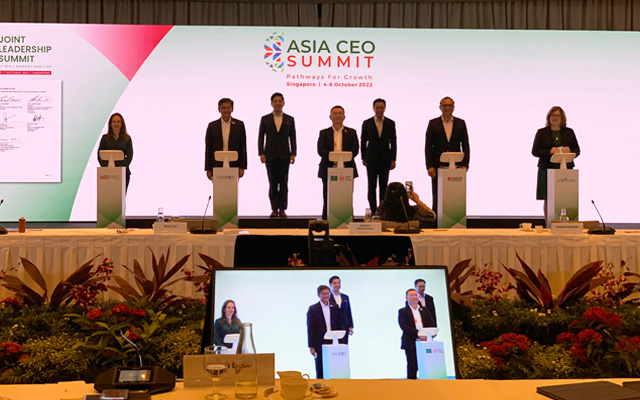
MICE stakeholders at the first Asia CEO Summit MoU signing
The Singapore Tourism Board (STB) inked two Memoranda of Understanding (MoUs) at the Joint Leadership Summit this morning, providing a boost to the business events industry in Singapore and cementing her status as a launchpad for international event organisers.
For the first, STB has signed a three-year MoU with the Singapore Association of Convention & Exhibition Organisers & Suppliers (SACEOS), and international MICE associations Association of Event Organisers (AEO), Society for Independent Show Organizers (SISO) and UFI, The Global Association of the Exhibition Industry (UFI) to host Asia CEO Summit @ Singapore (ACS@Sg) in 2022, 2023 and 2024.
MICE stakeholders at the first Asia CEO Summit MoU signing
Next, DMG Events, Enterprise Singapore and STB have signed an MoU to anchor Gastech 2023 in Singapore. Gastech, the world’s largest integrated exhibition and conference supporting the gas, Liquefied Natural Gas, hydrogen and energy value chain, is scheduled to take place at Singapore Expo in September 2023.
It will be attended by energy industry thought leaders, policymakers and industrial energy decision-makers, who will discuss trends, opportunities and pertinent challenges faced by the global energy market.
Yap Chin Siang, STB’s deputy chief executive, said: “As Singapore journeys towards Covid-resilience, we will continue to facilitate the safe and gradual resumption of MICE events. The new partnerships are a testament to our solid economic fundamentals and reflect Singapore’s strong standing as a Global-Asia Node for MICE and business. While the pandemic has changed the way we work and travel, Singapore remains committed to strengthening existing partnerships while forging new ones.”
The business events industry is still playing catch up with digital transformation, which has become a requisite for event organisers as countries around the world open.
AMR International’s executive chair Denzil Rankine said at the Asian MICE Forum that in 2019, the industry was 98 per cent analogue and two per cent digital. This meant that when the pandemic swept through the globe, it was a “major shock”, as many were not “prepared for a major change” in having to “deliver services digitally.”
Rankine: organisations needs to be digitally-led
And when the industry had to pivot quickly to digital formats during the pandemic, some virtual tradeshows were less than satisfactory, disappointing both exhibitors or sponsors.
Moving forward, Rankine pointed out that tradeshows and exhibitions will remain the highlight of any industry calendar. He further emphasised the need to use to ensure events are digitally ready, not just with the right apps, but also being able to use the data to better understand visitors’ needs and connect them with the right exhibitors.
Many transactions in the US$29 billion tradeshow industry – according to the Globex annual survey in 2019 – revolve around digital transformation, which has seen a strong annual growth of around five per cent, with an attractive profit level of 30 per cent for large organisers, and 20 per cent for small organisers.
Even before the pandemic, there was already a “low level of customer satisfaction”, Rankine said. He advised events organisers to be “consumer-centric” and be “more focused on understanding and satisfying customer needs”.
Regardless, Rankine remains optimistic that the business events industry will continue to grow post pandemic.
“Organisations that make substantial changes in the way they provide services… will (be able) to take quite a substantial share,” he concluded.
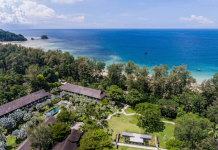
Just 10 minutes from Phuket International Airport on the serene northern coast, this 178-key, Bill Bensley-designed resort offers delegates a quiet, tropical paradise steeped in Phuket’s tin-mining heritage
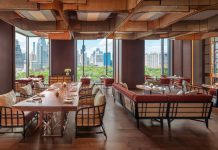
The newly-opened Ritz-Carlton, Bangkok anchors the One Bangkok development with cosmopolitan elegance. Featuring the city's largest ballroom and a spectacular new penthouse suite, it delivers exceptional hardware and deeply authentic, soulful service for business and leisure travellers alike
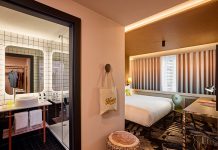
Behind the imposing, Brutalist concrete that defines Zurich’s Oerlikon district lies a surprising secret. While its exterior honours the neighbourhood’s industrial roots, stepping inside Mama Shelter reveals a vibrant, neon-soaked world that is a far cry from its rigid shell












Safeguarding mental health has become a priority for Philippine travel and tourism stakeholders who are more susceptible to depression, stress, and anxiety brought about by the consequences of the prolonged lockdown that is now entering its 19th month.
The extent of their suffering is gleaned from the recent Nikkei Asia’s Covid-19 Recovery Index (as of September 30), which ranks the Philippines as the worst among 121 countries in responding to the pandemic. Bloomberg’s Covid-19 Resilience Ranking classifies the Philippines as the worst place to be among 53 countries in containing the pandemic.
Addressing mental health concerns, the Tourism Promotions Board (TPB) and stakeholders’ online meeting every Wednesday has evolved “into a period for retooling and relearning,” pep talks and motivational talks, said chief operating officer Anthonette Velasco-Allones.
The simple act of guesting clinical psychologist Joanna Herrera, who discussed mental health and mindfulness last Wednesday, inspires and “keeps hope alive in the hearts of our stakeholders, including tour operators and travel agents”.
In the predominantly Catholic country where people find solace in spirituality, TPB’s wellness and work-life integration programme for its staff has online fellowship “to keep the team connected” that includes a virtual holy Mass every first Friday of the month and bible studies, Velasco-Allones said.
Many staff find therapeutic the Think Tok (a variant of Tik Tok) that refreshes skills on writing, productivity, powerpoint presentation, Zoom set up, and work from home set up. The most recent was a mindfulness session led by a yogi.
It is understood that the Department of Tourism will be adopting most of the mental health safeguards being practised by TPB.
Cleofe Albiso, group general manager of Megaworld Hotels, shared that they have a Circle of Happiness programme with several projects and activities including webinars for all associates “that allows us to love ourselves, our families, our community and God is at the centre of it”.
Albiso cited the importance of mental health and well-being as most of their properties are fully operational. Ten hotel general managers will attend the MICECON conference in Boracay late this month, for work and leisure for their general well-being.
Recognising that association executives face mental and physical anguish and stress during this pandemic, the Philippine Council of Associations and Association Executives has been balancing its webinar offerings with “hard core management and governance courses plus inspirational and motivation topic representations, such as those concerning personal upliftment and optimism like values and faith, which are part and parcel now of our new normal”, shared founder and CEO Octavio Peralta.
“Concerning faith, which life coach Bo Sanchez delivered, attracted the most number of attendees. We plan to do this more often,” Peralta added.
PATA Philippines Chapter, one of the first that addressed mental health issues for its members and stakeholders, once invited a priest to talk about keeping the faith, as well as celebrities who survived arduous life challenges.