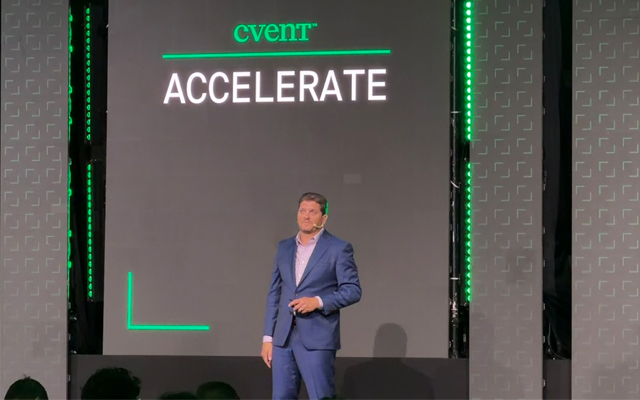
Tech advancements across attendee engagement, immersive presentations, and green infrastructure are set to redefine how business events operate, according to Cvent executive vice president Brian Ludwig.
Speaking during The Future of Event Tech session at Cvent Accelerate 2026 earlier this month, Ludwig highlighted five key areas undergoing transformation: attendees, sessions, speakers, exhibitors, and venue green tech.
To combat phone and laptop distractions on the show floor, Ludwig pointed to emerging hardware like AR smart glasses to deliver hands-free information. Other attendee-centric innovations showcased included motorised personal vehicles to navigate massive exhibition halls and thought-to-text input devices designed for seamless Q&A participation.
“You want to be able to interact with the world around you. Tech that allows the fostering of more engagement is just what the events industry needs,” Ludwig noted.
For speakers and exhibitors, Ludwig advocated for technologies that streamline logistics while enhancing immersion. Examples included Amazon One’s palm-recognition identity verification for seamless event entry, and the AI-powered Lenovo ThinkBook Plus Gen 7 Auto Twist, which tracks speaker movements to keep presenters automatically framed on screen.
Addressing event sustainability, Ludwig emphasised alternative energy and material solutions – such as Core Power Ocean’s wave-to-energy conversion systems and Biofase’s biodegradable cutlery manufactured from avocado seeds – to reduce the environmental footprint of large-scale gatherings.
Elaborating on the strategic value of event technology on the sidelines, Will Kataria, senior director & country head at Cvent Singapore, stated that data collection via event apps must focus on attendee engagement rather than basic attendance tracking.
“The more somebody interacts with the app, the more data points you have about them – what speakers they like, which events they attended, and who they met,” Kataria explained.
“It’s not important to have data on who came to that event; the value lies in understanding who is engaged. If 300 out of 1,000 attendees show high engagement, your call-to-action for that group should be entirely different.”